The Heritage of Symbolic Jewellery: Exploring Mysterious Motifs and Meanings in Traditional Signet Ring Design
For centuries, the artistry of symbolic jewellery has woven together threads of mystery, history, and personal meaning. Signet rings, in particular, have long served as vessels of identity and heritage, bearing enigmatic motifs that speak volumes about the wearer's beliefs, lineage, and aspirations. From ancient civilisations to contemporary culture, these pieces transcend mere decoration, becoming silent narrators of stories both intimate and universal. The allure lies not only in their visual beauty but also in the cryptic language they express, connecting past and present through carefully chosen symbols.
Ancient Emblems: Decoding the Language of Historical Jewellery Symbols
The tradition of embedding symbols into jewellery stretches back thousands of years, with signet rings emerging as one of the earliest forms of this practice. In ancient Mesopotamia around 3500 BC, craftsmen began carving seals into rings made from simple materials such as clay and bone. These humble beginnings laid the foundation for a tradition that would evolve into a sophisticated art form. As societies advanced, so too did the materials and techniques employed, with precious metals like gold and silver becoming the canvas for increasingly intricate designs. Each symbol carried layers of meaning, often understood only by those versed in the cultural codes of the time.
The Eye of Horus and Egyptian Protective Charms in Signet Rings
Egyptian civilisation brought forth some of the most enduring symbols in jewellery history, with the Eye of Horus standing as a powerful emblem of protection and divine authority. This iconic motif, representing the falcon-headed god's all-seeing gaze, was believed to ward off evil and ensure safe passage through both earthly and spiritual realms. Signet rings bearing this symbol were often associated with Ra, the sun god, linking the wearer to celestial power and eternal cycles. The Egyptians understood jewellery as more than adornment; it was a conduit for invoking favour from the gods and securing one's place within the cosmic order. These protective charms were not merely decorative but served as tangible expressions of faith and hope, passed down through generations as heirlooms imbued with ancestral blessings.
Tree of Life Motifs: Connecting Earthly Roots to Celestial Branches
Another profoundly resonant symbol found across cultures is the Tree of Life, a motif that elegantly captures the interconnectedness of all existence. Its roots delve deep into the earth, drawing nourishment and stability, while its branches reach skyward, aspiring towards enlightenment and transcendence. This duality makes it an ideal emblem for jewellery meant to represent family lineage, personal growth, and the eternal cycle of life and death. In signet rings, the Tree of Life serves as a reminder of one's heritage and the continuity that binds generations together. Its presence on a ring can signify a commitment to honour ancestral wisdom while nurturing future branches of the family tree. The symmetry and balance inherent in this design also evoke harmony and resilience, qualities cherished by those who wear such pieces as tokens of their journey through life.
Materials and craftsmanship: the art behind symbolic adornments
The choice of materials in symbolic jewellery is never arbitrary; each metal and gemstone carries its own significance and contributes to the overall narrative of the piece. Throughout history, artisans have carefully selected materials that not only enhance the beauty of the design but also amplify the symbolic message. The purity of metals, for instance, is measured in carats, with 9ct gold containing 37.5% pure gold, 14ct gold boasting 58.5%, and 18ct gold reaching a refined 75%. Platinum, prized for its durability and rarity, is 95% pure, making it a favoured choice for pieces intended to withstand the test of time. These considerations reflect a deep understanding of how material properties align with symbolic intentions, ensuring that each ring becomes a lasting testament to its wearer's values.
Silver and stainless steel: durability meets timeless elegance
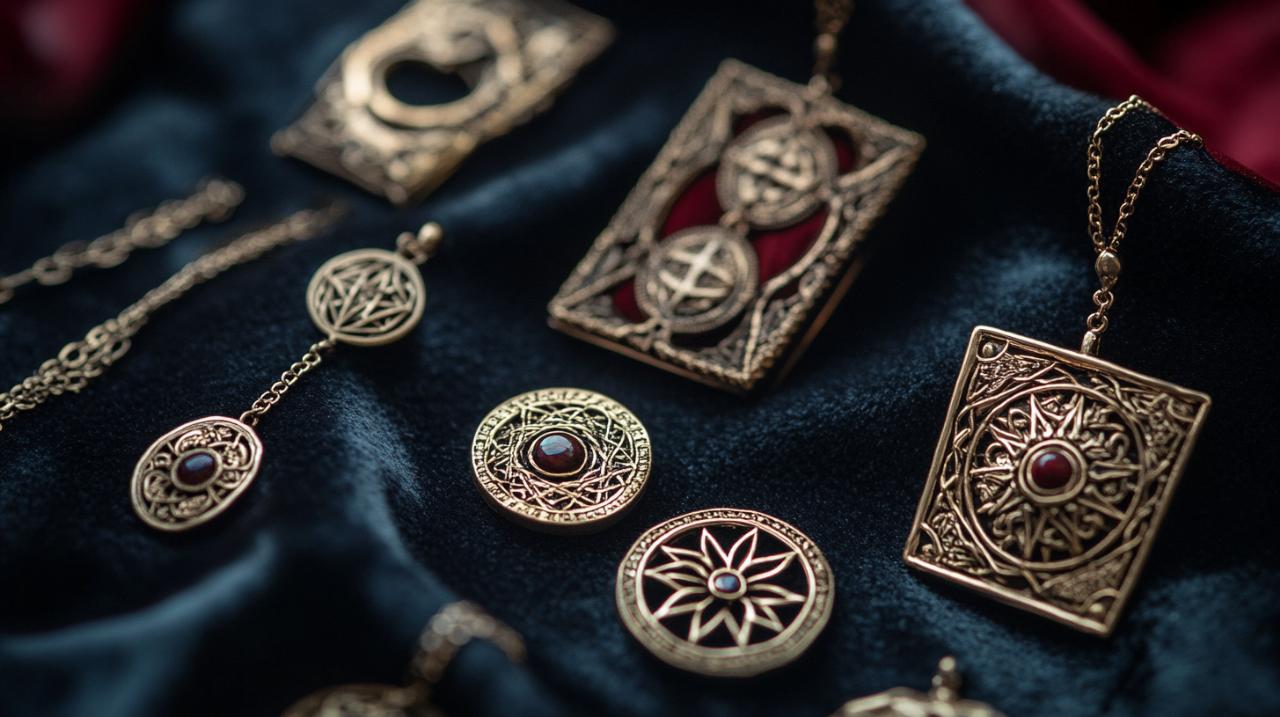
Sterling silver has long been celebrated for its lustrous finish and versatility, making it a staple in jewellery craftsmanship. When coated with a minimum of 2.5 microns of 18ct gold plate, it transforms into vermeil, a luxurious yet accessible option that combines the affordability of silver with the opulence of gold. Stainless steel, meanwhile, offers an alternative for those seeking durability and modern aesthetics. Its resistance to tarnish and corrosion makes it ideal for everyday wear, ensuring that symbolic motifs remain vibrant and legible over years of use. These materials democratise the tradition of signet rings, allowing individuals from diverse backgrounds to participate in a practice once reserved for the elite. The marriage of durability and elegance in these metals ensures that the stories etched into them endure, much like the symbols themselves.
Lapis Lazuli and Gemstone Inlays: Colour as a Carrier of Meaning
Gemstones introduce an additional layer of symbolism through their vivid hues and historical associations. Lapis lazuli, with its deep celestial blue flecked with golden pyrite, has been revered since antiquity as a stone of wisdom and truth. Ancient Egyptians used it to adorn the tombs of pharaohs, believing it held the power to connect the earthly realm with the divine. When inlaid into a signet ring, lapis lazuli transforms the piece into a statement of intellectual pursuit and spiritual depth. Other gemstones, such as roses carved into rings to symbolise beauty and love, or geometric patterns that evoke balance and order, further enrich the visual and emotional impact of the jewellery. Each colour and texture tells its own story, inviting the wearer to explore the manifold meanings embedded within their chosen piece.
Personal Expression Across Continents: Symbolic Jewellery as Gift and Heirloom
Signet rings and symbolic jewellery have transcended cultural boundaries, adapting to the unique traditions and values of different regions while retaining their core function as markers of identity and connection. Whether bestowed as gifts to commemorate milestones or cherished as heirlooms that traverse generations, these pieces serve as bridges between the individual and the collective. Their ability to encapsulate complex emotions and histories within a single object makes them invaluable in human experience, offering a tangible link to both memory and aspiration.
European Traditions: Heraldic Crests and Family Legacy in Rings
In Europe, the tradition of heraldic crests on signet rings reached its zenith during the medieval period, when lions, roses, and mythical creatures adorned the seals of nobility and monarchs. These symbols were not merely decorative but functioned as official marks of authenticity, used to validate documents and assert authority. A lion, for example, signified bravery and strength, while a rose represented beauty and love, qualities that families sought to embody and perpetuate. Monarchs employed their rings to impress crowns, crosses, and fantastical beasts into wax, creating indelible signatures that carried the weight of law and tradition. Beyond their practical applications, these rings became treasured symbols of family heritage, passed down through lineages as reminders of shared history and collective identity. In Roman society, signet rings also marked free citizenship, distinguishing individuals of status and enabling participation in civic life. This dual role as both personal talisman and social credential underscores the profound importance of symbolic jewellery in shaping European culture.
North American Influences: The Infinity Symbol and Modern Interpretations of Love
Across the Atlantic, North American approaches to symbolic jewellery have embraced a blend of tradition and innovation, with the infinity symbol emerging as a contemporary favourite. This elegant loop, representing eternal love and limitless possibility, resonates with those seeking to express commitment in a modern idiom. Unlike the intricate heraldic designs of Europe, the infinity symbol distils complex emotions into a simple, universally recognisable form. Its popularity reflects a cultural shift towards personal expression over inherited legacy, though the underlying desire to communicate meaning through jewellery remains constant. Whether chosen as a gift to commemorate a wedding anniversary or as a personal token of resilience, rings bearing the infinity symbol bridge the gap between ancient symbolism and present-day sentiment. The rise of accessible payment options such as PayPal Pay in 3 and Klarna credit has further democratised access to these meaningful pieces, allowing individuals to invest in jewellery that speaks to their unique narratives without financial strain. In both Europe and North America, symbolic jewellery continues to evolve, honouring its historical roots while embracing the diverse motivations and styles of contemporary wearers.


You May Also Like